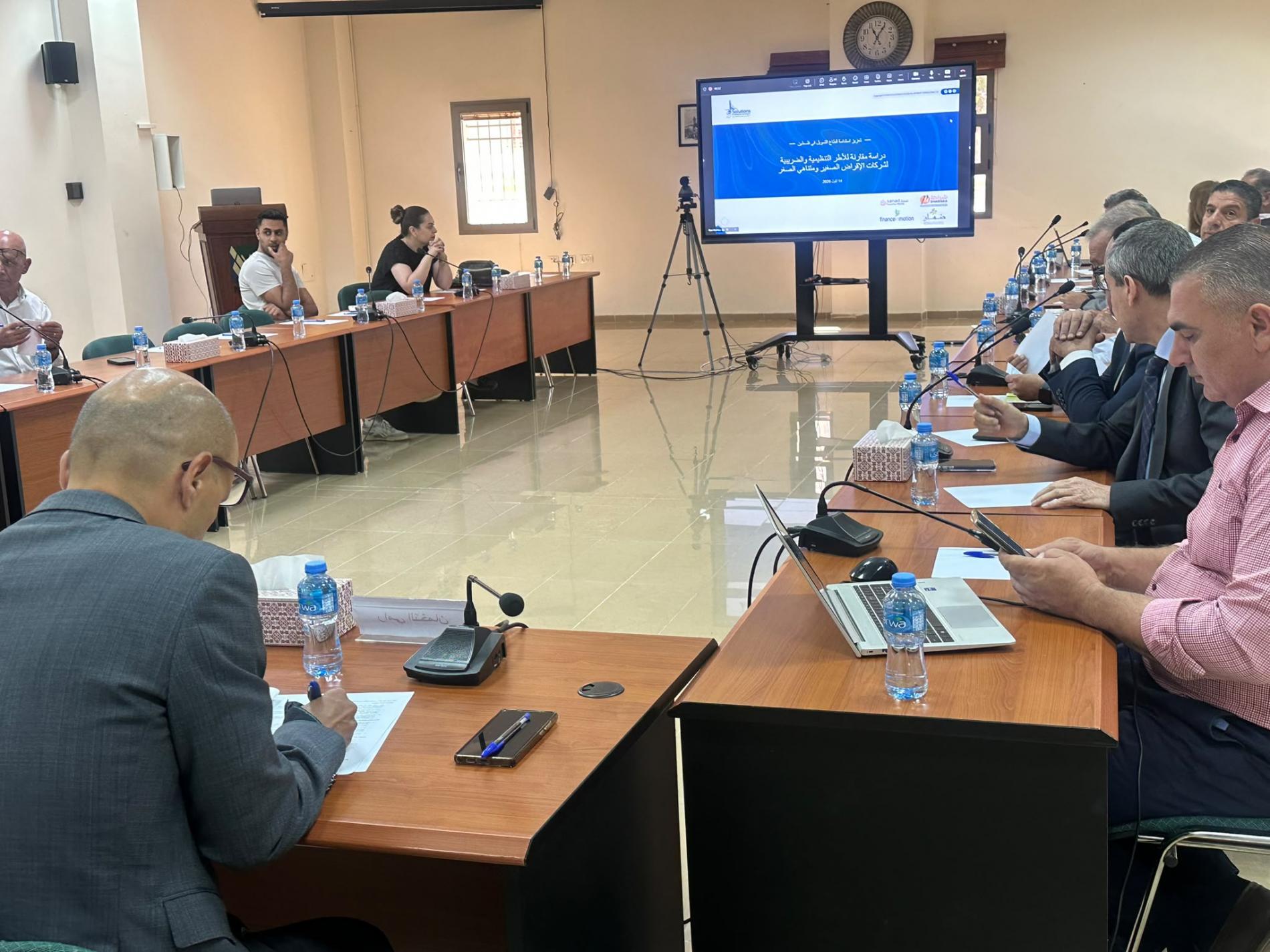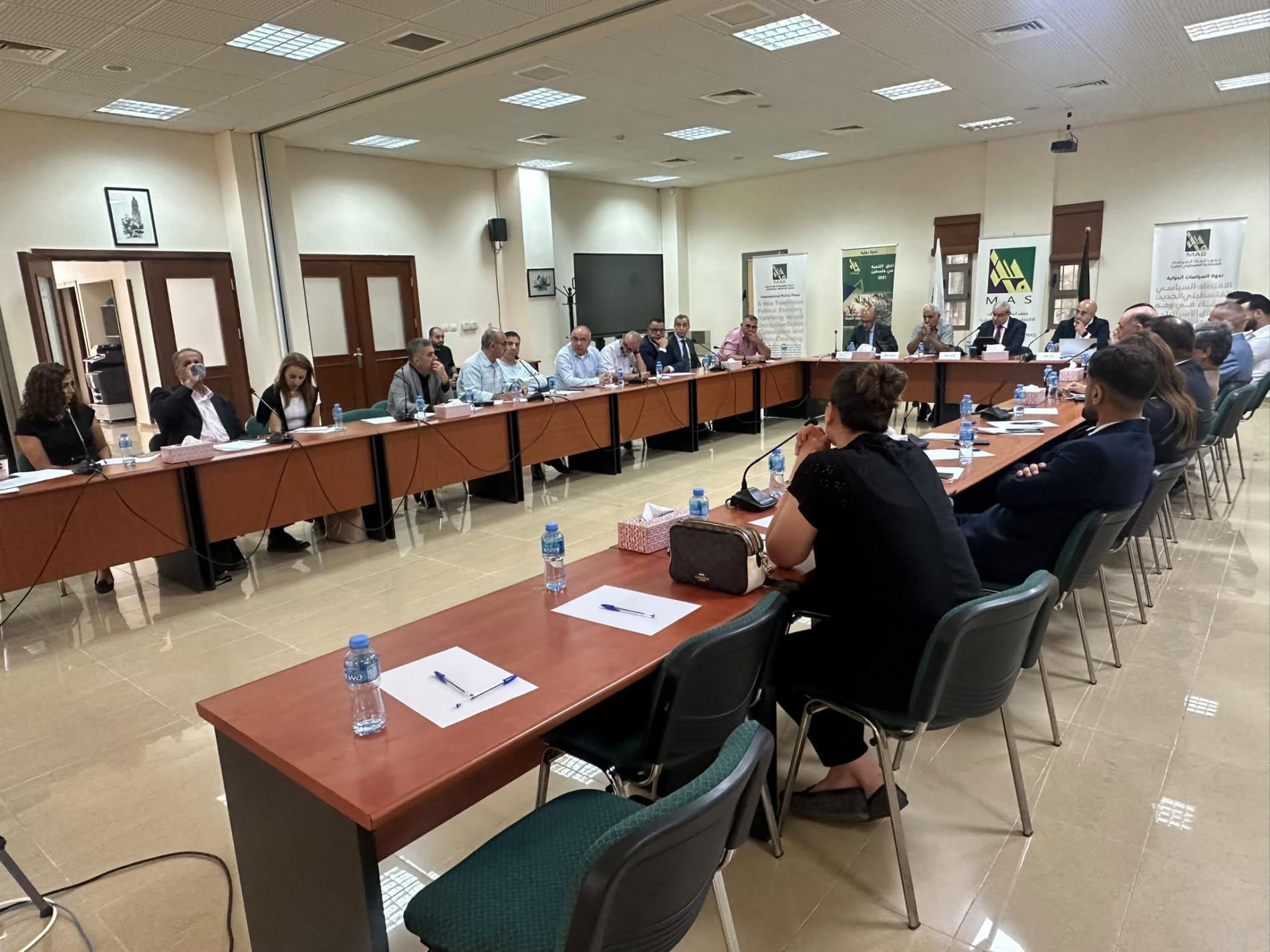
The Palestinian Union of Microfinance Insitiotions (SHARAKA), in cooperation with the Palestine Economic Policy Research Institute (MAS), held a workshop to discuss the findings of a study commissioned by SHARAKA entitled “Comparative Study on the Legal System, Taxation, and Interest Rates Governing Microfinance Companies in Selected MENA Region Countries.” The workshop brought together experts, specialists, representatives of relevant institutions, and stakeholders from the microfinance sector.
The study examined the legal, regulatory, and tax environment governing the microfinance sector in Palestine and compared it with frameworks in selected Arab countries. It aimed to identify key challenges and opportunities affecting the sector’s sustainability, efficiency, and capacity to expand and reach underserved communities. The study was conducted by Solutions for Development consulting, with support from Daman for small enterprises.
During the workshop, Mr. Rani Nahhas, Director of Solutions, presented the study’s key findings, covering the regulatory, tax, and pricing frameworks governing microfinance companies and their implications for institutional sustainability, operational efficiency, and outreach.
The findings highlighted several structural challenges, particularly those related to regulatory and tax requirements and their impact on operating costs and institutional sustainability. The study also emphasized the importance of adopting a more proportionate regulatory approach that takes into account differences in institutional size, business models, and risk profiles, while exploring opportunities to expand digital services and operations to improve efficiency, reduce costs, and enhance financial access.
The presentation was followed by a broad discussion among representatives of MAS, the Palestine Monetary Authority (PMA), the Ministry of Finance, microfinance institutions, and other sector stakeholders. The discussion covered the regulatory and tax environment, governance, consumer protection, and the role of microfinance in advancing financial inclusion and supporting economic development.
MAS emphasized the importance of building on the study’s findings and further examining key factors affecting the sector’s performance. The PMA highlighted the importance of sound governance, consumer protection, and continued dialogue among stakeholders in shaping appropriate regulatory and policy frameworks. The Ministry of Finance also stressed the need to review the tax treatment of the microfinance sector and ensure a fair and appropriate tax framework that reflects the sector’s role and developmental objectives.
The workshop forms part of SHARAKA’s efforts to strengthen dialogue and coordination between microfinance institutions, regulators, policymakers, and other relevant stakeholders, and to promote evidence-based approaches to developing the legal, regulatory, and tax environment of the microfinance sector in Palestine.
The workshop was held with the support of SANAD Fund for MSME and Finance in Motion.